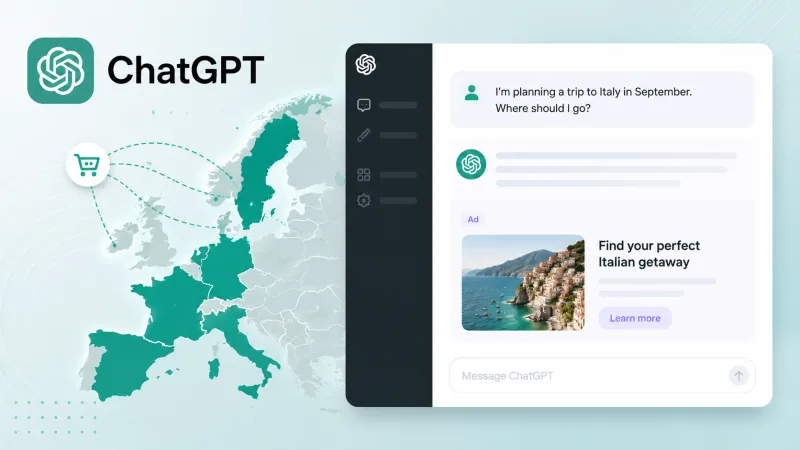
OpenAI is rolling out ChatGPT Ads across 31 European markets. For performance marketers, this matters because the format positions ads at a point where users have already articulated intent — closer to decision than standard display inventory.
The closer the contact to actual need, the fewer touchpoints required before conversion. That makes the channel worth testing for CPA, lead-gen, e-commerce and iGaming campaigns looking for quality over volume.
Why the channel deserves attention
The European launch covers enough ground to run systematic tests across languages and markets, comparing CPL, CTR, conversion rate and ROI by region. Early entry often means lower auction competition and cheaper data before the channel heats up.
Conversational inventory differs from search, social or native. Users arrive mid-task, often comparing options or looking for a solution. That context tends to deliver higher intent than passive browsing.
For affiliates and media buyers, the format suits direct offers as well as content funnels that warm users toward registration or deposit. The key advantage is relevance at the moment of consideration.
How to test without wasting budget
The main mistake is porting old creatives without adaptation. ChatGPT Ads require a separate approach because user behavior differs from search or feed environments.
Start by splitting tests by objective: brand awareness, lead generation, direct sale. Segment by geography and language — do not lump Germany or France with smaller markets if the goal is to understand traffic economics. Track post-click metrics, not just CTR. Session depth, bounce rate, lead quality and confirmed conversions matter more than raw clicks.
For arbitrage, measuring final conversion and actual margin is critical. Click-based evaluation tends to overstate performance.
Test multiple creative angles. The same offer can work through time savings, authority or pain removal. Measure incrementality — new channels sometimes cannibalize existing demand rather than create it.
Creatives and landing pages
Conversational environments reward brevity and utility. Users want answers, not noise. Messaging that promises concrete value works best: fast comparison, calculation, risk reduction, time saved.
For iGaming and affiliates, these angles typically perform:
- Comparison: bonuses, wagering, withdrawal speed, local payment methods
- Authority: ratings, curated lists, personalized picks
- Interest-driven: sports betting, live markets, slots, tournaments, VIP programmes
- Localization: language, currency, payment options, popular teams or events
Landing pages should continue the same tone. Users coming from a chat scenario expect clarity, not overloaded layouts. Compact pages with one primary action and minimal distraction tend to convert better.
Moderation, privacy and measurement
New channels bring constraints alongside opportunity. Three areas require early attention.
Moderation may be stricter for iGaming, fintech and nutra verticals than in familiar networks. Prepare creatives, pre-landers and offer copy with compliance margin.
European privacy rules are strict. Tracking, pixels, consent and first-party data handling need to be in place before launch, or part of the traffic will fall out of analytics.
Attribution is harder with conversational inventory. Do not fixate on last click. Look at assisted conversions, view-through effect, repeat visits and contribution to upper funnel. Media buyers should evaluate the channel as part of a system, not an isolated lead source.
How to extract value from the launch
Early advantage goes to those who structure tests quickly, not those who simply deploy budget. The practical sequence: identify which offers match conversational logic, test languages and markets fast, isolate working creative angles, then scale spend.
The channel will deliver most for businesses with clear lead economics and working analytics. ChatGPT Ads then becomes an additional demand source that plugs into CPA or revshare models rather than an experiment for its own sake.
For the European ad market, this is another signal that competition is shifting from volume to timing — the moment when a user is ready to decide. Those moments usually produce the best ROAS.


