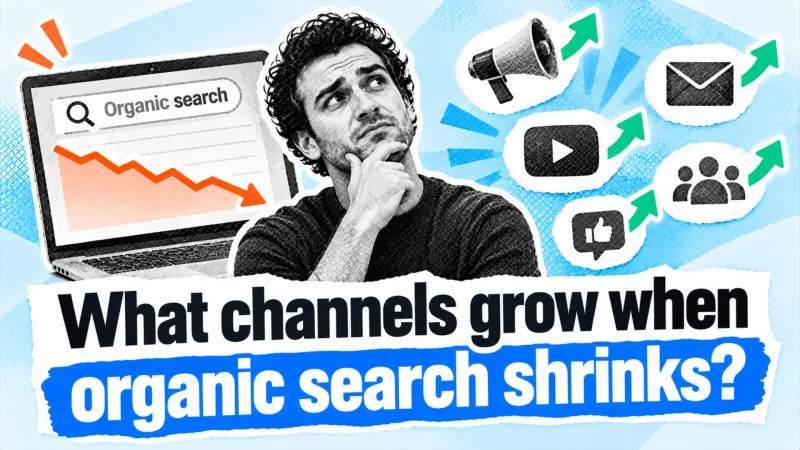
Organic search traffic has stopped being a reliable foundation for digital marketing. The data highlighted by Search Engine Land point to a steady trend: the share of visits coming from organic results is declining, while email and paid search are growing in volume. For teams accustomed to building strategy around SEO, this is a signal to reconsider how effort is allocated — and, more importantly, to rethink the very idea of how an audience is built.
The shift has several causes. Search results increasingly answer a query directly on the results page, reducing the number of clicks through to a site. At the same time, competition for attention inside search interfaces themselves is growing, and user behavior is moving toward more direct and personalized channels. As a result, traffic that used to arrive "on its own" now has to be earned deliberately.
The first winning channel is email. An owned subscriber base does not depend on algorithms or changes in the results page: a message is delivered directly, and its effectiveness is measured in opens, clicks and conversions rather than rankings. Growth in email traffic reflects a broader turn toward owned channels — the assets a brand controls itself. This also explains the increased attention to consent collection, segmentation and reactivating dormant subscribers.
The second growing channel is paid search. When organic positions deliver fewer visits, search advertising takes on the job of capturing demand at the moment of the query. Budgets flow to where results are measurable and controllable: bids, ads and landing pages can be changed faster than a content strategy can be rebuilt. A side effect is rising cost per click in competitive niches and the need for stricter ROI accounting.
Beyond these two channels, the data also point to other growth areas: direct visits, traffic from apps and messengers, referral and affiliate sources, and new interfaces where answers are generated by generative systems. The underlying logic is the same — traffic is fragmenting, and betting on a single channel becomes risky.
For audience building, this means a shift from a model of "attract as many visits as possible" to a model of "build relationships with specific people." Organic search remains valuable: it brings users with intent and builds trust. But its job now is less to fill the funnel than to work in tandem with retention channels. Content found in search should lead to a subscription; a subscription should lead to regular dialogue; dialogue should lead to repeat actions.
The practical steps look like this. It is worth revisiting attribution so that each channel's contribution along the path is visible, not just the last click. It makes sense to invest in an owned base — signup forms, useful newsletters, segmentation by interests and journey stage. Paid search should be treated as a tool for testing demand and scaling quickly, not as a replacement for organic. And finally, it is important to diversify sources so that losing one of them does not collapse the entire funnel.
The main takeaway from the data is simple: the decline of organic search is not a verdict on SEO but an invitation to redistribute roles. The channels that are growing share one thing — they require direct contact with the audience and ongoing work on the relationship with it. That, rather than the share of traffic from search results, is becoming the key measure of resilience in a changing landscape.


