Seasonal decoration catches the eye of 97% of shoppers, but the occasion still needs to match the audience. According to RWB Research, 35% of respondents aged 18–34 view Halloween positively or neutrally. That gap in older cohorts means the holiday works best as a targeted move, not a blanket rebrand — a viral plot, a meme or a local joke tied to the product is enough.
Interactive mechanics and characters
Geosocial app Blink, working with Zazerkalie, ran a map-based investigation in which users tracked down a missing character named Tryakhlik by questioning five witnesses — Koksha, Patsanoidy, Manya Ponich and Akakiy Kurolesov. For Zazerkalie the mechanic served as an introduction: users encountered its characters while playing through a story they joined out of curiosity.
VkusVill invented its own 'Day of Impure Ingredients' and introduced Cheshnulya, a garlic-head character that hunts suspicious smells on refrigerator shelves. The concept runs on a single familiar association — garlic repels evil — and redirects it toward the retailer's existing message about ingredient quality.
Limited products and campaigns
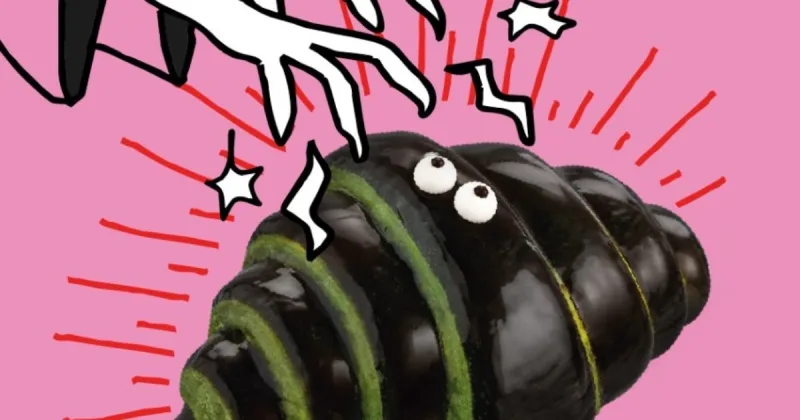
St Petersburg bakery chain Tseh85 released Halloween desserts based on memes from the TV show 'Battle of Psychics'. The recognisable references gave shoppers a reason to spot a favourite meme on the shelf and find out what it tastes like, with ready-made material for a photo share or a chat message.
McDonald's and agency Leo UK produced Spooky Sauces — a face-paint kit in the colours of six of the chain's sauces, with brushes shaped like french fries and a sponge modelled on a nugget. The brand inserted itself into the moment of choosing a Halloween look, keeping the McDonald's reference in every detail from shade to tool shape.
Crocs released a Horror Pack inspired by 'Saw' and 'Halloween', with styles referencing the Billy puppet and Michael Myers. Each pair was priced at $69.99. The collaboration gives fans a way to signal their attachment to the films through an item that remains wearable after 31 October.
Pringles ran a giveaway under its Once You Drop campaign, offering a cremation urn shaped like its signature canister — with personalised engraving — alongside a prize described as a 200-year supply of crisps. The joke depends entirely on the canister's recognisability and the idea of a fan staying loyal beyond death; the campaign is built for forwarding, with people sharing the news to ask 'Are they serious?'
Events and first steps
Professional networking app Setka and dating app Twinby co-hosted an evening called 'Nothing Scary' built around rapid one-on-one meetings. The framing recast Halloween's horror premise as the everyday fear of speaking to a stranger, and the format handled the logistics — matched pairs and a fixed time — so attendees could act on that without the usual friction.
Across these cases the holiday serves a specific task: Blink uses it to introduce characters, Tseh85 to draw attention to its range, Setka and Twinby to demonstrate what their services actually do. For Pringles, McDonald's and Crocs the creative starting point is a product detail the audience already knows. The useful question for any campaign is what the person will want to do with the idea — buy a limited item, talk to a character, meet someone, or send a find to a friend — because that determines both the mechanic and how to measure the result.


