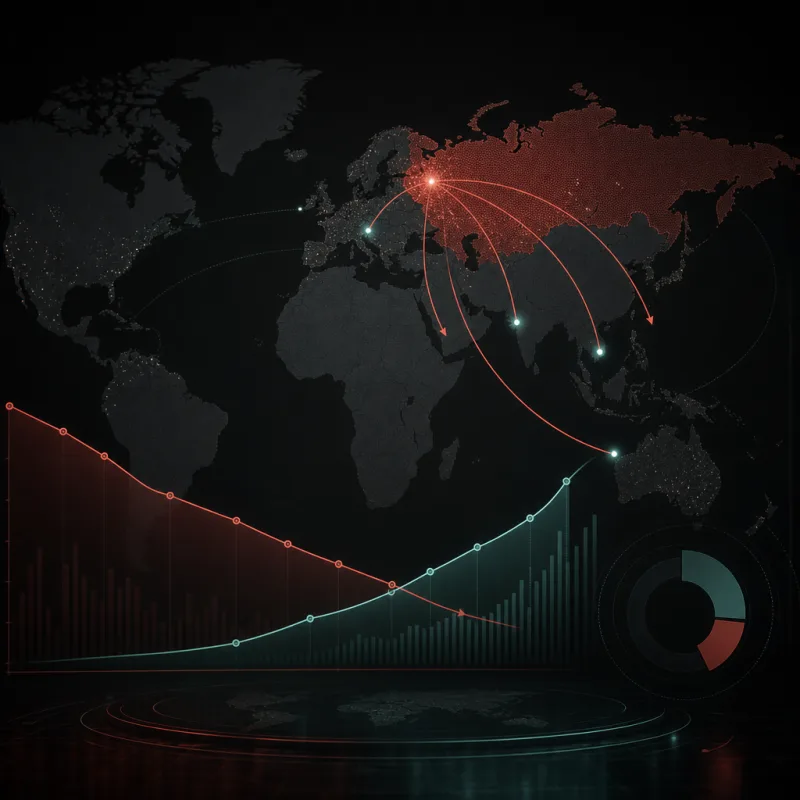
Illegal online casinos and sportsbooks in Russia have slipped to their lowest share of the market since 2018. Blask data puts licensed bookmakers at 60% in June, leaving grey operators 40%.
Enforcement
Illegal volume is down 69% from January 2024, when it stood at $839 million. The turning point came on 21 February 2024, when the Central Bank revoked the licence of Qiwi Bank, which handled payments for a large part of the grey market. A second blow landed in February this year, when the FreeKassa payment gateway closed after media reports linked it to illegal casinos. In August last year grey operators tried to push turnover to $442 million; the Central Bank's launch of a database of 'droppers' — card mules — ended that.
Legal side
Figures from the Unified Gambling Regulator support the trend: legal sports betting handle rose 8% year on year to 1.9 trillion rubles ($24 billion) by May. Alexei Botika credits the football World Cup with helping licensed bookmakers hold on to clients and win new ones, with both bet frequency and average stake rising.
The grey market has not gone. Boris Gubkin of RB Business points to blocked social networks as a remaining advertising channel. CasinoBeats found ads for Russian-language illegal sites on X and YouTube despite blocks, with users reaching them through VPN. A source at a large licensed bookmaker expects the Finance Ministry's bill to legalise online casinos to add pressure. From 1 September, a law on a unified self-exclusion register took effect: operators must block listed citizens or face a fine of up to $6,400.


