How the deals work
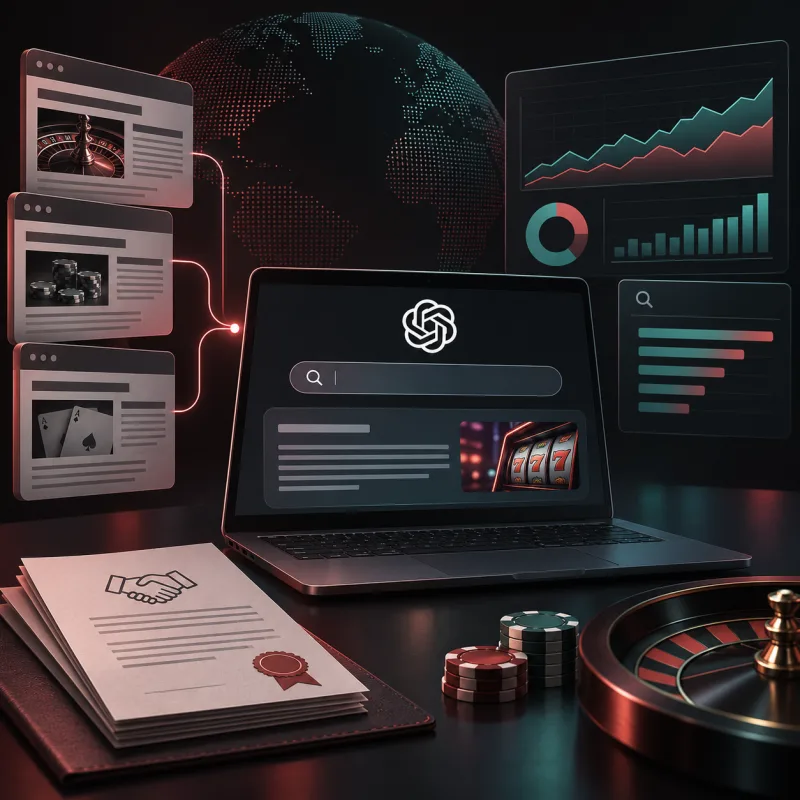
OpenAI licenses content from media companies: the publisher grants access to its archive, and ChatGPT returns excerpts with attribution and a link. The structure is the same across all partnerships.
Publishers gain visibility — their material appears in the chatbot's answers with a cited source. OpenAI gets quality content for training and response generation. The user sees the source and can click through.
Why publishers sign up
Traffic. When ChatGPT cites an article and drops a link, part of the audience clicks through to the original. For media, it's a reader acquisition channel that does not depend on search rankings.
Archive monetisation. Old pieces that no longer pull organic traffic start working again through mentions in chatbot responses.
Position in the AI ecosystem. Publishers who have not struck a deal with OpenAI risk being left out: their content may be used without attribution or not used at all.
Who has signed
OpenAI's partners include major media groups and trade publications. The company has not disclosed the full list or deal terms, but agreements are in place with several dozen outlets.
Citation frequency varies. Some publishers appear in ChatGPT answers regularly, others sporadically. It depends on query topics, content freshness and how relevant the publisher's material is to user questions.
What it means for arbitrage and SEO
For affiliates and SEO practitioners, the shift matters: ChatGPT is becoming a traffic source. If your content enters OpenAI's dataset and gets cited with attribution, you receive visits without ad spend or search optimisation.
The problem is that the selection mechanism is opaque. You cannot simply 'optimise a site for ChatGPT' — you either sign a licensing deal or hope your content makes it into the training set.
Risks for publishers without a deal
If a publisher has not agreed terms with OpenAI, its content may still be used for model training — but without attribution or links. The user gets information from your article but never learns the source and does not visit the site.
Some publishers block OpenAI crawlers via robots.txt, but that also cuts off the chance of appearing in attributed answers. The dilemma: either hand over content for free or stay invisible in AI search.
Outlook for the model
Licensing deals are currently OpenAI's way of legitimising content use and avoiding lawsuits. Publishers receive compensation and traffic, but the durability of this model is unclear.
If ChatGPT starts answering questions fully without requiring a click-through to the source, the value of attribution drops. The user will not need to follow the link — all the information is already in the chat. Publishers would be left with licensing payments but no traffic.
For now, links in ChatGPT answers work as a bridge between AI and the traditional web. But the smarter the model gets, the less the user needs that bridge.


